We were never meant to think only in terms of what we see. Fear shrinks us, but faith expands our vision. When you start thinking higher, you begin to live from God’s perspective. It’s not about denial—it’s about realignment. You trade anxiety for trust, panic for purpose.
“For my thoughts are not your thoughts, neither are your ways my ways,” declares the Lord. “As the heavens are higher than the earth, so are my ways higher than your ways.” —Isaiah 55:8-9 NIV
It's so easy to get consumed by the here and now. Every season feels permanent, every struggle overwhelming, and every triumph all-consuming. But as believers, we know this isn’t the full story. The truth is, God’s perspective is vastly different from ours. While we often focus on a single moment, He sees the whole picture—the beginning and the end.
God created the world with eternity in mind. That means, His thoughts are higher, greater, and better than ours. Scripture says, “For my thoughts are not your thoughts, neither are your ways my ways,” declares the Lord. “As the heavens are higher than the earth, so are my ways higher than your ways” (Isaiah 55:8-9 NIV). This is the ultimate invitation into thinking differently, or shall we say, thinking higher.

To think higher means to lift your gaze beyond the immediate, and intentionally align your thoughts with His. This isn’t about invalidating your thoughts; it’s about acknowledging His as the ultimate truth. His perspective allows you to see things in their true context—where what seemed overwhelming suddenly appears manageable when viewed from a divine vantage point. It’s exchanging your “thing” for His “thing above the thing.”
Consider for a moment being in a busy city like Los Angeles or Denver. The traffic can feel like it’s wall to wall, the hustle and bustle of the people, hurrying about their day. Thousands of people passing by, most who you’ll never know by name. Towering overhead, you’d see more buildings and skyscrapers than you could count. If you were to stop long enough to take it all in, you could become completely bogged down, even overwhelmed, or maybe lost in translation.
And then, you board one of those planes flying overhead and within a few short minutes, all of a sudden you’re soaring high above it all. Everything that once felt so big and so daunting now appears to be as small as an ant hill. Is it as small as an ant hill? Of course not, but with a new vantage point, it changes your perspective on everything.
Thinking higher is like boarding that plane with God—not diminishing the reality of what we face but gaining the perspective to handle it as He sees it. When you align your thoughts with God’s, you gain fresh insight into your circumstances, whether joyful or difficult, and can better act in alignment with His will and when you’re in His will, thinking like He thinks. That means, even on your best days, His plans are still better and on your worst days, He offers hope beyond the pain.
Today, what’s “your thing?” Maybe it’s the fear, worry, or financial distress you’ve been experiencing, maybe it’s the day to day grind. Maybe your “thing” is a relationship seeming to fall apart or an unexpected doctor’s report. Or maybe your “thing” is even your dreams and your goals, your hopes and desires. No matter what your “thing” is, lean in with God and begin to ask Him for his “thing above the thing.”
When you are deeply rooted in the knowledge of God’s higher purposes, it transforms the way you approach everything. You’re no longer bogged down by the fleeting pressures of the world. Instead, you’re empowered to do earthly good, to bring the light of heaven into the darkness around you. Allow Him to elevate your vision today.
Ask God to help you see beyond the trees. Seek His perspective, and let your heart be awakened to His higher calling. As you do, you’ll find that even in the midst of the most ordinary moments, you are equipped to do extraordinary things for His kingdom. May you become so heavenly conscious, so eternity-minded that you have the capacity to do even more earthly good.

Steps to Take:
Step 1: Ask for Heaven’s Vantage Point
Tell God, “I want to see what You see.” Then look again.
👉 Practical tip: Read Isaiah 55:8-9 and write down one area you need a new lens.
Step 2: Flip the Thought
Catch a lie or fear-based thought—and replace it with His Word.
👉 Practical tip: Sticky note His truth on your mirror. Speak it over yourself daily.
Step 3: Live from the Mountaintop
Walk into your day like you already know the outcome—because you do.
👉 Practical tip: Declare: “He is working above what I can see.”
💥 Don’t just survive the day—elevate your perspective. You’re not grounded—you’re being lifted.
Start thinking higher today. Watch this video to understand the importance of higher thinking and wisdom, explore my book, or tune into my podcast to elevate your thoughts and your faith.
Patterns can be comfortable, even if they’re destructive. But comfort isn’t the same as freedom. If you’re tired of the same struggle, know this: God is all about breaking the cycle. One moment of surrender can interrupt years of dysfunction. He’s not just calling you out—He’s calling you forward.
You say, “I am allowed to do anything”—but not everything is good for you. You say, “I am allowed to do anything”—but not everything is beneficial. —1 Corinthians 10:23 NLT
Do you ever find yourself repeating the same mistakes? Maybe you vow to break a bad habit, only to find yourself back in the same place two weeks later. Or you take ten steps forward, only to fall twenty steps behind, despite having the best intentions.
It’s tempting to shrug it off and say, “Well, that’s just who I am,” or to pretend the pattern isn’t there. But deep down, you know it’s a cycle worth breaking. The good news is you’re not alone—and even better news is that there’s a way out.
As believers, one of the most important things we can do is recognize our patterns. Those things you keep doing that you don’t want to do? The habits you want to quit but feel stuck in? Jesus died not only for your sins but for the destructive patterns in your life as well. Scripture tells us that if “the Son sets you free, you are free indeed” (John 8:36). That freedom isn’t just for someone else—it’s for you.
But let’s be real: breaking free from habit loops can feel overwhelming, and it’s easy to spiral into blame, shame, and guilt. Questions like, “Why do I keep doing this?” or “What’s wrong with me?” often arise, but they rarely offer real answers.

It’s been said the quality of your questions determines the quality of your answers. So instead of asking, “Why do I keep doing this?” consider shifting your focus to a new question:
What do I want now versus what do I want most?
What we want now often leads us to avoid pain, choose the path of least resistance, or indulge in temporary fixes that make us feel good in the moment. But what we want most speaks to the deeper desires that can transform our future—if we start making decisions based on where we’re going, not just where we are.
Both paths are hard. So here’s the truth: Pick Your Hard.
Paul, in the book of Corinthians, sheds light on the same struggle we face in balancing our freedom with discernment. He writes, You say, “I am allowed to do anything”—but not everything is good for you. You say, “I am allowed to do anything”—but not everything is beneficial (1 Corinthians 10:23 NLT). This reveals the tension of living as believers. We know that we have freedom in Christ—He fulfilled the law and set us free from the limitations of this world. But true freedom in the Lord requires a deeper awareness that our choices should reflect His nature. While we can do many things, not everything aligns with God's best for us.
This means making decisions not just based on immediate desires, but on what we want most—a heart and mind in tune with God’s will. When you’re truly aligned with Him, anything outside of His will becomes a clear "no" or as my 7-year old says, “That’s a nope on a rope!” It’s about making choices that reflect His character and bring lasting growth.
Just because you have the freedom to do something doesn’t mean it’s the best choice for your well-being or your relationship with God. Shifting your focus from short-term satisfaction to long-term transformation opens the door to breaking free from limiting beliefs, bad habits, and unhealthy patterns that you find yourself in so you can step into the abundant life God has for you.
The real question is: Will you choose the path of temporary relief, which may seem easier now but brings greater difficulty later, or the path of discipline, which is tougher at first but leads to lasting transformation? Both will be hard. Pick your hard. The choice is yours.
Steps to Take:
Step 1: Identify the Loop
Name the habit, belief, or behavior that keeps repeating. Be honest.
👉 Practical tip: Write: “This cycle stops with me.”
Step 2: Shift the Want
Ask yourself: “Do I want relief or transformation?”
👉 Practical tip: Compare “What I want now” vs. “What I want most.”
Step 3: Declare Your Freedom
Speak truth over your situation. Even if you don’t feel it—faith it.
👉 Practical tip: Say out loud: “God set me free, and I am free indeed.”
💥 Change doesn’t start with a plan—it starts with surrender. You’re not stuck. You’re stepping forward.
Breaking the cycle starts with a choice. Watch my video on how to break free from what others think of you, explore my book, or grab a free devotional resource to step into lasting change.
God isn’t confined to your past or waiting only in your future. He’s right here, right now. When you choose to be in the present, you tune into the rhythm of grace. The present is where transformation happens, where healing takes root, and where peace floods your soul.
Whatever you do, work at it with all your heart, as working for the Lord, not for human masters, since you know that you will receive an inheritance from the Lord as a reward. It is the Lord Christ you are serving. —Colossians 3:23-25 NIV
“How to live more present.”

It’s one of the most common Google searches today, yet one of the hardest things for most people to master. Think about your own life—where do you wish you were “more present”? What’s holding you back from that?
The number one reason we struggle with being present is that we’re constantly “busy.” Somewhere along the way, the American Dream morphed into the pursuit of busyness. Our society constantly shouts the message: “He who does the most, the quickest, wins!” Everything pushes us to be faster, better, and to do more. We stack our to-do lists to the max, cram our schedules to overflowing, and spend countless hours and loads of money trying to learn how to multitask, close deals faster, and hustle harder than everyone else.
This culture of “doing” feeds our need for approval, affirmation, and belonging… until it doesn’t. We eventually reach a point where we sit down, reflect, and realize we aren’t happy—we're tired, drained, exhausted, and certainly not present. Once we can admit we’re “feeding the need,” trying to fill a bottomless pit, we can pause and realign with God’s original design.
In the book of Colossians, we read: Whatever you do, work at it with all your heart, as working for the Lord, not for human masters, since you know that you will receive an inheritance from the Lord as a reward. It is the Lord Christ you are serving (Colossians 3:23-25 NIV). This allows us to see that "living present" isn’t a starting point, rather a result of something.
I would like to propose to you that living present isn’t about adding more to your plate. In fact, it's not even about taking things off your plate. Living present is a byproduct of something so much deeper—it’s the result of learning to care more about fewer things and caring for them with your whole heart, as unto the Lord.
I call it “caring more about less.”
Consider running water: it may seem gentle and unassuming at first, but when its strength is concentrated into a single point, it becomes a powerful force of nature. When water is channeled or focused into a narrow stream or jet, its pressure and intensity increases dramatically, allowing it to cut through solid materials like rock or metal with precision. This focused force can carve out deep canyons over time or, in modern technology, be used in high-pressure water jets to slice through steel. The power lies in the concentration—what is soft and flowing in its natural state becomes a relentless force when directed with focus. It's a reminder that even something as gentle as water, when concentrated, can have immense strength and impact.
As believers, our lives should be marked by strength and impact! Our lives should be marked by whole-hearts working for the Lord. That means, caring more about less is a life focused on living for an audience of One! It means keeping your eyes solely on Jesus; He is your target, your source, your everything—your reason why. Hech, He’s your new boss! When His voice becomes the most proactive voice in your life, He has this beautiful way of refining you (as we learned yesterday) and showing you what truly matters.
God is a God of divine order, so as He becomes your top priority, He gives you the ability to focus on fewer priorities that align more with His purpose for your life. Then, it’s about proactively eliminating anything that distracts you from what He has called you to do, focusing on what He has called you to do, and doing it with your whole heart. Not half-heartedly, not for approval from others, and not in a rush, but with full devotion as if you’re doing it for the Lord—because you are.
The real key to living more present isn’t just about being in the “here and now”—it’s about being with the Lord and discerning what He is saying, doing what He’s called you to do, unapologetically. When you live in that awareness, caring more about less, the natural result is a more present life.
Today, I encourage you to care more about what God thinks, and less about the opinions of others. Care more about what He’s called you to do, and less about what others say you should do. Care more about doing fewer things with your whole heart, and less about doing “everything” with only half your heart.
P.S. This will be hard.
P.P.S. You can do hard things.
Steps to Take:
Step 1: Simplify the Noise
Silence one voice today that isn’t God’s—social media, opinions, comparison.
👉 Practical tip: Log off for one hour and breathe. He’s in the quiet.
Step 2: Focus on What’s in Front of You
Ask God, “What matters most right now?”
👉 Practical tip: Make a list of your real priorities—not your to-dos.
Step 3: Do One Thing Wholeheartedly
Whatever you do, do it with your whole heart as unto the Lord.
👉 Practical tip: Say out loud, “This matters. I’m doing this for You, Jesus.”

💥 The present is holy ground. Walk in it. Care more about less—and give it your all.
As you learn to be in the present, you’ll find peace where you least expected it. Watch this video to learn how to be present and stop limiting your beliefs, explore my book, or better yet, watch my podcast to embrace the now.
In a culture that rewards speed and constant motion, the Holy Spirit invites us to slow down. When you pause and reflect, you allow God to cut through the clutter. Stillness is not weakness—it’s sacred space. It’s where clarity comes, truth settles in, and your next steps are shaped by heaven.
The earth was rocked at the sound of his voice from the mountain, but now he has promised, “Once and for all I will not only shake the systems of the world, but also the unseen powers in the heavenly realm!” Now this phrase, “once and for all” clearly indicates the final removal of things that are shaking, that is, the old world order, so only what is shakeable will remain. Since we are receiving our rights to an unshakeable kingdom we should be extremely thankful and offer God the purest worship that delights his heart as we lay down our lives in absolute surrender, filled with awe. For our God is holy, devouring fire! —Hebrews 12:26-29 TPT
Many years ago, I was asked, “What’s your burn?”
I had no idea at the time how much that question would shift my understanding of my spiritual walk. Now, I pass that same question onto you: What’s your burn?
As we explored in yesterday’s devotional, the troubles and trials of life, though not caused by God, are always used by Him to shape us into maturity and completeness—reflecting Jesus. That means, nothing goes unseen by God and nothing is wasted. God’s ultimate goal for us on this side of heaven is to look more like Christ. That is the why.
But how does God accomplish this? How does He refine us into His image?
Through His refining fire.
As humans, we are oftentimes shaped by our upbringing, our experiences, personal interpretations, external influences, and even unprocessed pain. Even in the best environments, we are still born into sin. That means, as we grow in our walk with the Lord, we must be re-shaped by Him, refined in Him. This is not a one-time event—it’s an ongoing process of alignment between us and a holy, righteous God who wants us to become more like Him.
Sooooooooo, I must ask: Have you felt the pressure recently? Maybe you’ve sensed a shaking—whether within you or around you, in your circumstances, in your family or business. Maybe you’ve felt it within friendships or within the church you attend. Perhaps, you are being refined.

For some, refining feels like relentless pressure. For others, it may seem like one obstacle after another, or like a series of emotional, financial, or relational struggles. But no matter how it manifests, the refining process is always spiritual. Always.
Scripture tells us, The earth was rocked at the sound of his voice from the mountain, but now he has promised, “Once and for all I will not only shake the systems of the world, but also the unseen powers in the heavenly realm!” Now this phrase, “once and for all” clearly indicates the final removal of things that are shaking, that is, the old world order, so only what is unshakeable will remain. Since we are receiving our rights to an unshakeable kingdom we should be extremely thankful and offer God the purest worship that delights his heart as we lay down our lives in absolute surrender, filled with awe. For our God is holy, devouring fire! (Hebrews 12:26-29 TPT). This is the refiner’s fire.
In the Bible, the term “refiner’s fire” refers to the process of purifying precious metals like silver or gold. Through intense heat, impurities rise to the surface and are removed, leaving the metal in its purest form. Likewise, God uses the trials and difficulties of life to refine our faith and mold us into Christ's image. Though it’s easy to believe that things are happening to you, we must remember that in the Kingdom, things always happen for you. What feels like a shaking or even breaking, is God transforming us into the truest, purest form of our God-given identity. It’s uncomfortable at times, but it’s always purposeful.
Let the shaking you feel break off the old mindsets, habits, and beliefs that no longer serve you. Let the pressure shape you so you reflect more of Jesus. Let the refining fire purify you and sanctify you for the Lord. Let the tension you feel draw you closer to God, not push you farther away. Allow it to strengthen your resolve, to separate your dreams from your fears, to tear down anything that stands against the truth of Christ.
Hardship is inevitable, but the choice to allow it to refine you into Christlikeness is up to you. Don’t resist the fire; surrender to it. Though you may feel pressed and shaken, be unmovable.
This is the hour to be refined, purified, and set apart. It is an hour to embrace the new and let go of the old as you are shaped and refined to be His ready bride.
May you feel the burn and may you become refiner’s fire.
Steps to Take:
Step 1: Make Space for Stillness
Give God uninterrupted attention. Even if just 10 minutes.
👉 Practical tip: Set a timer. No phone. No multitasking. Just Him.
Step 2: Ask What’s Being Shaken
Pray, “God, what are You refining in me?”
👉 Practical tip: Write the word burn at the top of your journal page. See what comes out.
Step 3: Lay it Down
Offer one thing that no longer serves your future. Let it go into the fire.
👉 Practical tip: Physically write it down and toss the paper or burn it (safely).
💥 Don’t fear the fire. Let it burn away the old. You’re being refined, not destroyed.
When you make space to pause and reflect, you find your burn and give God room to reset your vision. Watch this video on how to break free as a visionary, explore my book, or grab a devotional resource to embrace stillness with purpose.
Ever hit a wall and asked, “What’s the point?” You’re not alone. Pain has a way of clouding vision. But God’s purposes often unfold in places we’d rather avoid. He’s not ignoring your pain—He’s using it. In His hands, even your lowest moments become a setup for growth, revelation, and intimacy.
Consider it pure joy, my brothers and sisters, whenever you face trials of many kinds, because you know that the testing of your faith produces perseverance. Let perseverance finish its work so that you may be mature and complete, not lacking anything. —James 1:2-4 NIV
How can “joy” and “trials” exist in the same sentence?
It seems contradictory at first, but maybe it's because God sees something we don’t. Too often, our focus is on the win—the result, the dream, the happiness that comes from the destination. And while there's nothing inherently wrong with that, if our goal is purely the outcome, we miss the deeper purpose. We miss the point. We worship a God who has already won (1 John 5:4).
This means we aren't striving for victory; we are living from victory. With this assurance, our striving can cease, our fears can be silenced, and we can recognize that the journey—whether painful or pleasant—isn’t about the end result. It’s about what’s happening within.
You are the point.

When you understand this, you unlock a joy that transcends outcomes. This joy doesn’t come from reaching the goal but from becoming who God created you to be through the process, regardless of the obstacles. The point is your character being refined so you can be everything God created you to be.
The book of James expresses this truth so powerfully: Consider it pure joy, my brothers and sisters, whenever you face trials of many kinds, because… The word “because” is key here, reminding us that God doesn’t allow trials without purpose. As the passage continues, …because you know that the testing of your faith produces perseverance. Let perseverance finish its work so that you may be mature and complete, not lacking anything (James 1:2-4 NIV). This proves that it's not merely about reaching the end goal, but about what the process cultivates within you—perseverance, maturity, and wholeness.
Though God is not the author of pain, He is a God who works all things together for good, if we allow Him to (Romans 8:28). That means, trials are tools in God's hands, shaping you into who He created you to be. He uses the trials not to break us, but to make us into the mature, complete children He’s always intended us to be—lacking nothing. Our trials aren't just hurdles to overcome, but opportunities for growth.
If you’re facing a trial today, the Bible calls you to embrace it with joy because God is doing a deep work—within you. He’s refining you, preparing you, and creating within you a character that reflects His glory. He’s working out of you what can’t go with you. What you're going through isn't just about the destination or the dream; it's about you—about who you're becoming in the process.
You’re the point.
Instead of resisting the process, be grateful. In fact, be full of joy! Say, "I see what you're doing here, God. Though I don’t like it, I know that you love me and you’re refining me. Thank You for refining me. Thank You for using every trial to bring out the best in me. Though this tests me, it won’t break me. You’re shaping me into everything You've promised I would be." Joy isn’t found in escaping the hard times; it’s found in knowing that God is using everything for your good. \
Step 1: Name the Pain
Write down what’s been hardest to walk through lately. Don’t avoid it—face it.
👉 Practical tip: Journal: “God, I don’t understand this, but I trust You’ll use it.”
Step 2: Reframe the Struggle
Ask, “What is this pain producing in me?”
👉 Practical tip: Meditate on James 1:2-4 and circle every word that reveals growth.
Step 3: Praise in the Middle
Worship not because of the outcome—but because He’s with you in it.
👉 Practical tip: Play one worship song that declares joy in trials.
💥 You’re not being broken—you’re being built. God wastes nothing. Not even this.
If you’ve ever asked, “What’s the point?” let Him show you. Watch my video on how to start your day with purpose, explore my book, or tune into my podcast to find meaning in the mess.
We’ve all worn masks. We’ve all said “I’m fine” when we weren’t. But there’s no need to pretend with God. He sees what others miss. He sees the cracks, the ache, the longing. And here’s the grace: God knows your heart, and He chooses to stay. His knowing isn’t to condemn—it’s to heal.
God rewrote the text of my life when I opened the book of my heart to his eyes. —Psalm 18:24 MSG
How’s your heart?
Well, that’s a loaded question, isn’t it? It’s also the reason why women often avoid me at the park—they know I’m not there for small talk about the weather or the news. I want to know how their heart is. Though it's not a complex question, I have found it's very hard for one to answer.
Usually, when I ask, “How’s your heart?” I get one of two responses. Either there’s an outpouring of “all the things,” with emotions spilling all over the place. We call these people “over-sharers.” Or there’s a dumbfounded, blank stare. These are our “analytical friends” that cringe at the thought of a conversation about the heart.
But heartset is universal—it influences all of us, whether we’re aware of it or not.
If your skillset is the framework of your abilities and talents, and your mindset is the framework of your thoughts, then your heartset is the framework of your heart—it's the posture and alignment of your heart. It's the emotional framework through which you experience life, guiding how you feel, perceive, and ultimately make decisions. Heartset influences how you approach life—your dreams, relationships, and even your faith.
We live in a world that celebrates skillset and is obsessed with mindset, but often disregards or forgets the importance of heartset. Truth be told, you can have all the skillset and mindset in the world, but without a whole heart—an open, aligned heart—you will struggle and fall short of the full life Jesus promises. But a heart that is healed, open, and connected to God has the capacity to live out the bold dreams He has placed within you.
So, how is your heart?

The heart is no small matter in Scripture. It’s mentioned over 500 times in the NIV and more than 800 times in the KJV. The world might say, “Follow your heart,” but God never tells us to follow our hearts—He tells us to follow Him. At the same time, we often hear, “The heart is deceitful” from the pulpit, which can be true if our hearts are not focused on God. But the deeper truth is that God created your heart, and He does want all of it.
Though the idea of giving the Lord our whole heart makes sense, why can it feel so hard to do? Honestly, life. Life happens—failure, setbacks, hurt, mistakes. It’s easy to allow these experiences to cause us to shut down, numbing ourselves to avoid future pain, and guarding our hearts. Or, we may allow our emotions to get the best of us, completely dominating our lives, causing us to follow every feeling we feel rather than standing on God’s truth. The issue isn’t that emotions are invalid; it’s that unprocessed emotions lead to confusion and confusion always leads to a guarded heart and a lifetime of small talk.
I’d like to propose that small talk is a result of a guarded heart. Watch, the next time you’re at a park, or even with friends, be aware of how much conversation is happening without much of anything actually being said. Why? Because we are guarding our hearts.
Ultimately, a guarded heart is a broken heart and every broken heart needs healing. Healing isn’t a moment in time, nor does it happen automatically, it’s a process. People say that, “Healing takes time.” No! Time doesn’t heal all wounds. Healing does. It’s a proactive process that requires both time and attention and one we must learn to get comfortable with. But where does one begin?
Psalm 18:24 says, God rewrote the text of my life when I opened the book of my heart to his eyes. God can and will do the remarkable, inconceivable, most improbable things with your life, but first, you must open the book of your heart before His eyes. When you give your whole heart to the Lord, you find wholeness and completion.
Though I never want to minimize your healing journey to a 3-step guide, here is the process I have found effective for healing and wholeness:
When you learn to continually bring your heart to the Lord, on the daily, He will heal and restore you over and over again. This restoration happens through an ongoing process of opening your heart before the Lord (take), resting in Him (set), and pursuing what pleases Him (put).
Watch as those small talk conversations turn into meaningful connections, opening deep wells of understanding for someone on their journey toward revelation. Watch how everyday moments transform into opportunities to share Jesus, support someone in their struggles, or encourage someone in their faith journey, whether they know God or not. A healed heart expands your capacity to truly care.
Today, begin to re-establish a divine heart healing by opening the book of your heart before the Lord. Let Him refine, realign, and renew your heart. He is faithful and He will write a beautiful story with your life!
Take, set, put.

Step 1: Get Real With God
Tell Him exactly how your heart feels today. No filter. No fix. Just honesty.
👉 Practical tip: Pray aloud, “God, here’s where I’m hurting...”
Step 2: Let Him Set Your Heart
Ask Him to anchor your heart in eternal things, not fleeting feelings.
👉 Practical tip: Read Colossians 3:1 and journal what “setting your heart” looks like for you.
Step 3: Put Your Whole Heart In
Show up for life with full presence—not halfhearted effort.
👉 Practical tip: Choose one task today and do it as if Jesus asked you personally.
💥 Healing isn’t a moment—it’s a rhythm. But it starts with opening the book of your heart.
If you believe God knows your heart, then give Him permission to go deeper. Watch my video on what the struggle truly reveals, explore my book, or grab a free devotional resource to experience healing and freedom.
The world doesn’t need more opinions—it needs light. God didn’t call you to hide or blend in; He commissioned you to shine. Being the light of the world isn’t about perfection—it’s about presence. It’s about showing up with truth, love, and boldness that shifts the atmosphere. Your life might be the only gospel someone ever sees.
You are the light of the world. A town built on a hill cannot be hidden. Neither do people light a lamp and put it under a bowl. Instead they put it on its stand, and it gives light to everyone in the house. In the same way, let your light shine before others, that they may see your good deeds and glorify your Father in heaven. —Matthew 5:14-16 NIV
Yesterday we learned that “bold” isn’t something you feel, it’s someone you become as you spend intentional time with Jesus. The closer you get to Him, the easier it is to step out for Him.
Outside of Spirit empowerment, “bold” also means having a strong or vivid appearance—being striking and bright. I’d like to propose that those with the boldest dreams shine the brightest for the Lord!
Too often, we think of dreaming as a waste of time—unrealistic, impractical, or even selfish. We come up with reasons why we don’t have enough time, resources, or abilities. Then we hear people say, "Dream big!" and we chase that artificial sense of significance as though it's the answer we've been looking for. But not only is “big” not the answer, it's never something you heard Jesus say.

Jesus never encouraged us to chase after “big” or greatness for our own sake. While the world may equate dreaming big with personal success or fame, Jesus invites us to instead, dream boldly with Him as we align with His kingdom and reflect His heart for the world. It’s not about the size of the dream but the depth of our obedience to what He’s calling us to do.
Jesus says in Matthew 5:14-16, You are the light of the world. A town built on a hill cannot be hidden. Neither do people light a lamp and put it under a bowl. Instead, they put it on its stand, and it gives light to everyone in the house. In the same way, let your light shine before others, that they may see your good deeds and glorify your Father in heaven. As believers, it’s our responsibility to make this side of heaven look more like it and to boldly show up for Him, to dream with Him, to shine bright because of Him.
I’ve heard it said countless times that the world is growing darker, but perhaps, the light is getting dimmer. When we shrink back into comfort zones and avoid stepping out in faith, we dim the very light we're called to carry but let me remind you, darkness is just an absence of light. But when the light reveals itself, the darkness no longer has power. It dissipates. Therefore, blaming the dark for being dark doesn’t solve the problem and when we spend too much time criticizing the darkness—whether in our culture, communities, or even our own hearts—we can lose sight of our own true responsibility: to turn up the brightness of the light within us.
Dreaming with the Lord is about boldly showing up—for Him and with Him—to a world that desperately needs more than just a vision board. It needs an encounter with Jesus. It needs the bright light of a Savior and like the moon reflects the sun, so are you designed to reflect the light of Jesus. I’m here to remind you today that playing small doesn’t reveal the testimony of Jesus. He didn’t call you to play it safe; He called you to be the light of the world, to step boldly into your calling and reveal His transformative power through your life.
We cannot lower the standard of Jesus, the Light, to accommodate the darkness we see around us. Not only do we need to speak light into the darkest places, we need to be the light. We need to be a people who are boldly dreaming with the Lord, believing in miracles, stepping out in faith, and partnering with the dreams, visions, and prophetic words that He has placed in our hearts. When we do this, we radiate the truth of Christ and become beacons of hope and transformation, a testimony of God’s power to the world. No matter how dark the world becomes, even a small amount of light can go a long way.
It’s time! It’s time to stop focusing on the darkness and instead, shine brighter. It’s time to partner with what God is doing, to dream the dreams He is dreaming, and embrace the call: be the light.
May your bold dreams shine bright!

Steps to Take:
Step 1: Light One Candle
Find one place in your day to intentionally be light—through encouragement, truth, or kindness.
👉 Practical tip: Text someone a verse or word of life without expecting anything back.
Step 2: Refuse to Dim Your Light
Name the area where you’ve been shrinking back. Ask God to help you stand tall.
👉 Practical tip: Write down: “I will no longer dim my light in ______.”
Step 3: Reflect the Son
Don’t force the glow. Just spend time with Jesus and let His light reflect off you.
👉 Practical tip: Pause for 10 minutes with worship music. Let His presence do the shining.
💥 You don’t need to be the source—just the reflection. Show up and shine.
Keep being the light of the world wherever you go. Watch this video for how to successfully pursue your dreams in God’s light, explore my book, or check out my podcast to keep shining with confidence and clarity.
Too often, we play it safe with God. We ask for comfort, protection, and the expected. But what if faith was never meant to be cautious? What if it was meant to be courageous? God doesn’t just respond to polite whispers—He honors audacity. Prayers that stretch us invite the miraculous. Bold prayers reveal a heart that trusts more in God’s ability than in our own limits.
The members of the council were amazed when they saw the boldness of Peter and John, for they could see that they were ordinary men with no special training in the Scriptures. They also recognized them as men who had been with Jesus. —Acts 4:13 ESV
Bold.
We all have preconceived notions about this word, don’t we? I know I did. For the longest time, I would not have described myself as “bold.” Sure, I caught glimpses of it when I did something brave or spoke out in moments that required courage, but boldness always seemed fleeting—here one moment, gone the next.
I admired people whose lives were marked by boldness—the ones on the front lines, those who defied the odds and faced battles head-on. But me? I didn’t think I fit that mold. Maybe you feel the same way.
Yet here we are, embarking on a journey to dream bold dreams, pray bold prayers, and take bold action. So, we better start rethinking what boldness truly means. And here’s the good news: Biblical boldness isn’t what you think.
The world may define boldness as being outspoken and courageous, running towards the thing you fear without feeling fear but when we unpack the Scriptures—when we look at the lives of those who were bold for the Lord—we see a different picture. One that may surprise you, and I hope, encourages you.
In my opinion, no one embodies boldness in the New Testament quite like the apostles we see in the book of Acts. These are men who spoke life in the face of death, declared truth amongst the lies, and shared love behind prison bars. Their lives are a profound example of boldness, because they were rooted in something much deeper than most are. Acts 4:13 says, The members of the council were amazed when they saw the boldness of Peter and John, for they could see that they were ordinary men with no special training in the Scriptures. They also recognized them as men who had been with Jesus.
Here’s the key: These men were ordinary people doing extraordinary things simply because they were with Jesus.
It wasn’t Peter and John’s education or status that made them bold. It wasn’t natural talent or fearlessness. It was their time with Jesus that empowered them to be bold. I believe that biblical boldness isn’t about how large your dreams are or how brave you feel—it’s about the depth of your relationship with the Lord and your obedience to what God is calling you to do. Simply put, boldness is the willingness to say “yes” to Jesus! And come to find out, the more you spend time with Him, the easier it is to say “yes” to Him!
I am here to tell you today, if you want to be more bold, spend more time with Jesus! When you spend time with Him, you fall in love with Him and develop a selfless desire to obey Him. Real obedience is birthed out of love, not fear. Therefore, boldness flows from an intimate connection to Jesus. It’s not something we muster up on our own; it’s something the Spirit empowers us to do. Boldness is Spirit-led, not self-led.
Would any of the apostles, Peter and John specifically, have chosen prison, rejection, and hardship if it were up to them? Probably not. But they were willing—willing to say “yes” to God, no matter the cost. Their boldness was not based on their own strength but on their dependency on God. That’s the heart of boldness.
Boldness doesn’t mean you never face fear or doubt; it means you simply choose to trust and obey God even when the path is uncertain. Boldness means saying “yes,” even when you want to say no. Though obedience isn’t always convenient, it's always worth it.
As you dream with God, He’s going to challenge you. He’s going to ask you to step into things you’ve never imagined, to think in ways that stretch you, and to act with the kind of faith that will take you beyond your comfort zone. He’ll blow your mind with what’s possible and He’ll shift your perspective on what’s true. But here’s the beauty of it: as you depend on Him, you’ll discover that with God, nothing is impossible. All He needs is your “YES!”
Boldness is a life of intentional connection with the Lord and ongoing obedience to His will. It’s trusting God in the face of adversity, and moving forward even when plans don’t unfold the way we expect. It’s staying committed to God’s presence and purposes, even when the dreams seem impossible. Boldness isn’t about never feeling fear; it’s about choosing to trust God in spite of fear.
May your life be marked by your YES to Jesus—empowered by the Spirit and fully connected to the One who can do immeasurably more than all you ask or imagine.
Steps to Take:
Step 1: Speak What Scares You
Pray the prayer that makes your voice tremble. Say the thing you’ve been afraid to speak out loud.
👉 Practical tip: Write down your boldest prayer, then read it out loud as a declaration.
Step 2: Ask for Holy Confidence
Tell God, “I want to trust You more than I fear failure.” Then listen.
👉 Practical tip: Read Acts 4:13 slowly, asking, “What made them bold, and what would that look like in me?”
Step 3: Say “Yes” Before You Know the Outcome
You don’t need all the answers. You just need the obedience to say “yes.”
👉 Practical tip: Start today with, “Whatever You ask of me, Lord, my answer is already yes.”
💥 Boldness begins at the altar of surrender. Say yes, even when it’s hard. Heaven is waiting on your voice.
When you dare to pray bold prayers, your faith activates heaven’s response. Watch my video on how to live bold, check out my book, or download a free devotional resource to keep walking in bold surrender.
Too many of us go through the motions—church, prayer, worship—yet deep down, we know we’ve been holding back. What if God is asking for more than a routine? What if He’s after your whole heart? This post explores what it truly means to be devoted to God, and why that changes everything.
I counsel you to buy from me gold refined by fire, so that you may be rich, and white garments so that you may clothe yourself and the shame of your nakedness may not be seen, and salve to anoint your eyes, so that you may see. Those whom I love, I reprove and discipline, so be zealous and repent. Behold, I stand at the door and knock. If anyone hears my voice and opens the door, I will come in to him and eat with him, and he with me. —Revelation 3:18-20 ESV
This isn’t your typical devotional. This is a move of God, and it starts within you. He’s chosen you. Will you choose Him back, all in, fully devoted?
The word devotion is not only an act of prayer or personal worship, but a wholehearted love, loyalty, and enthusiasm for a person or cause. It’s a deep allegiance, a zeal for something or better yet, someone, that shapes our lives and choices. In fact, devotion speaks to a self-dedication—an all-in commitment.

Learning this got me asking a lot of questions that I now pass on to you:
To live in devotion to God is to step beyond half-hearted living, past fear and worry, into a place of whole-hearted love and enthusiasm for Him. When you’re devoted solely to Him, you’re willing, energized, and motivated—walking in the passion and fire of God.
What if your daily dreaming with the Lord wasn’t just about the “right” steps or even “bold dreams,” but about developing the right heart committed to His dreams? Or better yet, a heart fully alive, committed to Him?
His word says, I counsel you to buy from me gold refined by fire, so that you may be rich, and white garments so that you may clothe yourself and the shame of your nakedness may not be seen, and salve to anoint your eyes, so that you may see. Those whom I love, I reprove and discipline, so be zealous and repent. Behold, I stand at the door and knock. If anyone hears my voice and opens the door, I will come in to him and eat with him, and he with me (Revelation 3:18-20 ESV). This passage paints a picture of Jesus standing outside the church while the congregation gathers without Him.
How often do we find ourselves going through the motions—attending church, participating in activities, and learning about God’s word—without truly inviting Jesus into the center of our hearts? How often do we approach our faith without full devotion, zeal, or complete surrender?
Jesus is knocking because He desires more than just a surface-level relationship—He wants in! He doesn’t want us merely attending church or going through the duties of Christianity; He wants to take up residence in our hearts. He wants to be present in every area of our lives, not just the parts we allow Him into. This is a "come to Jesus" moment where you realize that while you've given Him some access, you may not have given Him all access.
The good news is, in Christ, there is no condemnation (Romans 8:1). This passage offers hope, as Jesus stands outside the door, patiently waiting for us to invite Him in. So how do you let Him in? It begins with repentance—turning away from what holds you back from going all in and offering yourself fully to Him. Not just parts of you, but every part—your pain, shame, pride, anxiety, fear, and limited understanding. It also means surrendering your hopes, dreams, goals, and ambitions to Him.
We often look to the world for answers, validation, and fulfillment, but Jesus alone is the source of lasting satisfaction and true, eternal treasure. Material things and worldly status will fade, but when we fully surrender to Christ, we receive His “gold”—riches that are found in a deep, abiding relationship with Him. This wealth is eternal, transformative, and life-giving, as our hearts become fully aligned with His. True riches are found in a life wholly devoted to Him.
Today, I encourage you to open the door of your heart in a new way. Repent and seek Him with full devotion, zealously pursuing a deeper relationship with Jesus. He is knocking—will you answer? Will you let Him? Will you be fully devoted?
Take time today to renew your commitment to Him. Let this new level of devotion ignite your soul, setting you free to dream with the Lord. He has given you those dreams for a reason. As you walk in full devotion to God, not only will your life be transformed, but you will also begin to look more like Jesus, bringing His presence and heaven to earth.
Step 1: Open the Door
Jesus is knocking. Will you let Him in?
👉 Practical tip: Say out loud: “Jesus, You have all access. I’m not holding anything back.”
Step 2: Get Honest About Your Devotion
Take inventory. What gets your enthusiasm, time, and attention?
👉 Practical tip: Write down the top 3 things that consume your focus. Then ask, “Are these fully surrendered to God?”
Step 3: Go All In
Being devoted to God means no more halfway living.
👉 Practical tip: Make one bold move today that reflects total surrender—a fast, a journal entry, a decision, or a conversation.
💥 Full devotion begins with full access. Let today mark the moment you stopped going through the motions—and started living a life fully devoted to God.
You were made for more than surface-level faith. If Jesus is knocking, let Him in—all the way. When you choose to be devoted to God, you step into alignment with your purpose, your power, and His presence. Watch my latest video, explore my book, or grab a free devotional resource to keep walking in bold surrender.
Let me be real with you. We live in a world that glorifies hustle and applauds exhaustion. If you’re in a leadership role, chances are you’ve been praised more for grinding through burnout than for operating from alignment. I know the pressure. The deadlines. The meetings that could’ve been emails. The “just push harder” mindset that’s become a badge of honor. But what if the key to your next level isn’t found in doing more… but in becoming more?
I’ve been there—running at full speed, performing, striving, and leading… all while quietly breaking down on the inside. I thought the answer was to white-knuckle it. To put in more hours. To push through the fog. But here's what I’ve learned the hard way: burnout isn’t a requirement for breakthrough.
If you're reading this and you're tired—mentally, emotionally, spiritually—I want you to know you’re not alone. The truth is, our current culture has confused progress with pressure. We’ve equated effectiveness with busyness. We’ve lost sight of the fact that high performance must be rooted in alignment, not adrenaline.
Leveling up doesn’t mean doing everything. It means doing the right things from the right place.
What I share with corporate teams and leadership groups is this: sustainable growth starts with self-awareness. It’s not about checking more boxes; it’s about checking your foundation. Are you clear on your values? Are you aligned with your purpose? Are you leading from overflow or depletion?
Because here’s what’s true: you can’t lead others where you haven’t gone yourself. Your team doesn’t need a superhuman—they need a human, fully alive, fully present, and fully aligned. And that starts with giving yourself permission to pause.
Life moves fast. Business moves even faster. But true leaders know the value of the pause.
Think about it? When was the last time you paused?! Whoops. Been awhile? You're not alone. However, in a reactive culture, we need to be the ones who have the ability to pause and get back in a proactive posture.
Here’s how to pause on purpose and move forward with intention:
Ask: What does success actually look like for me (or our team) this season?
Practical step: Take 10 minutes. Grab a journal. Write the sentence: “Success, to me, looks like __.”
Don’t overthink it. Let it be real—not what culture says, not what others expect—what matters most to you and your mission.
Ask: Is what I’m building actually worth it? Is it aligned with my vision, mission, and company standards?
Practical step: Audit your calendar. Circle the things that bring high energy to you, the things that are the highest and best use of your time. Cross out what’s draining you or pulling you off course.
Then ask: Is my schedule reflecting my actual priorities or just my obligations?
Ask: Why did I say “yes” to this business in the first place? What’s the deeper purpose that originally lit my fire?
Practical step: Look back at your journal, old vision notes, or journal. Re-read the “why” that once moved you to tears.
Write 1–2 sentences that anchor you again. Post it somewhere visible.
Ask: What is ONE next bold step I can take today or this week—not the whole 5-year plan—but the next, bold step?
Practical step: Schedule a 30-minute block. No phone. No distractions. Just you and a blank page.
Write: “What’s my next bold step?”
This isn’t about throwing in the towel. This is about picking up the right tools—the ones that allow you to grow without burning out. The ones that allow you to dream bold without drowning in stress. The ones that allow you to go further because you slowed down.
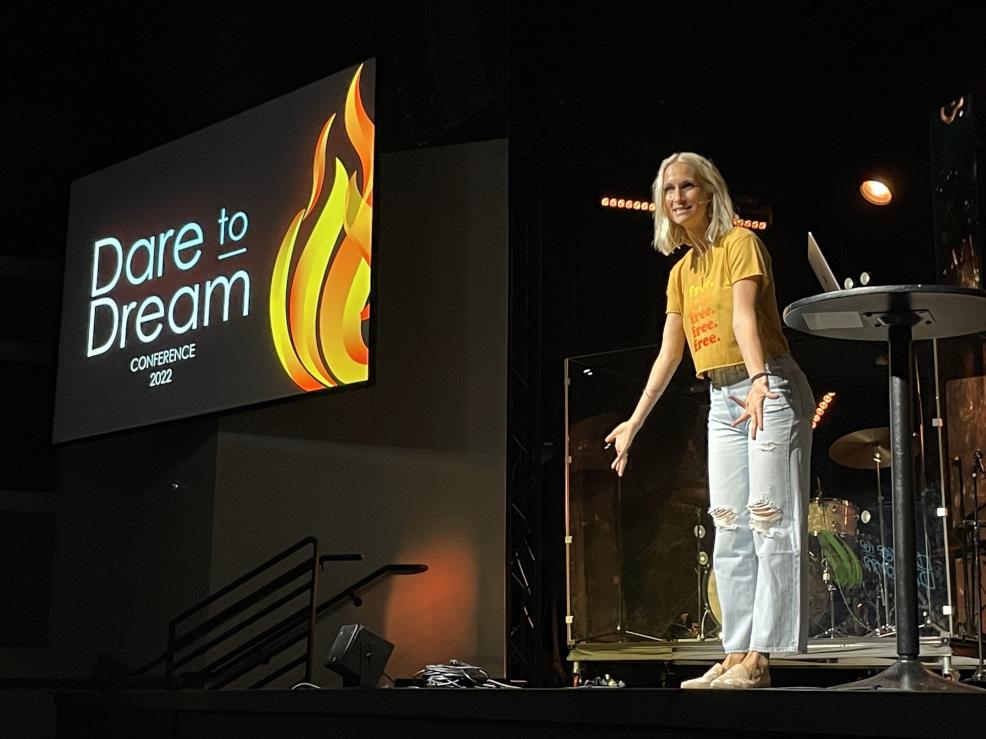
If any of this resonates with you—if you're tired of running on fumes and ready to step into your next level with purpose—I’d love to continue the conversation. I recently recorded a message on this very topic: How to Level Up Without Burning Out. Give it a listen when you’ve got a few minutes and a quiet moment to breathe.
And if you’re leading a team and wondering how to create a culture that prioritizes both purpose and performance—I’d love to speak into that. Let's book a discovery conversation.
Because burnout isn’t your only option.
There’s a better way. Let’s find it—together.